

Office Pods Guide 2025: Transform Your Workspace
Open-plan offices are changing rapidly, and office pods are leading this transformation in 2025. These modular spaces offer privacy, flexibility, and a boost in productivity for any organization. In this comprehensive guide, you will discover what office pods are, their core benefits, the different types available, and how to select and implement the right solution for your team. Imagine a work environment where focus, collaboration, and privacy all coexist. Ready to future-proof your workspace? Read on to learn how office pods can elevate your office and support your employees’ well-being.
What Are Office Pods?
Office pods are transforming how organizations approach workspace design. These compact, self-contained units are engineered to provide privacy and focus within bustling office environments. Unlike conventional partitions, office pods are modular, offering a flexible solution that adapts to the needs of modern teams.
Definition and Core Features
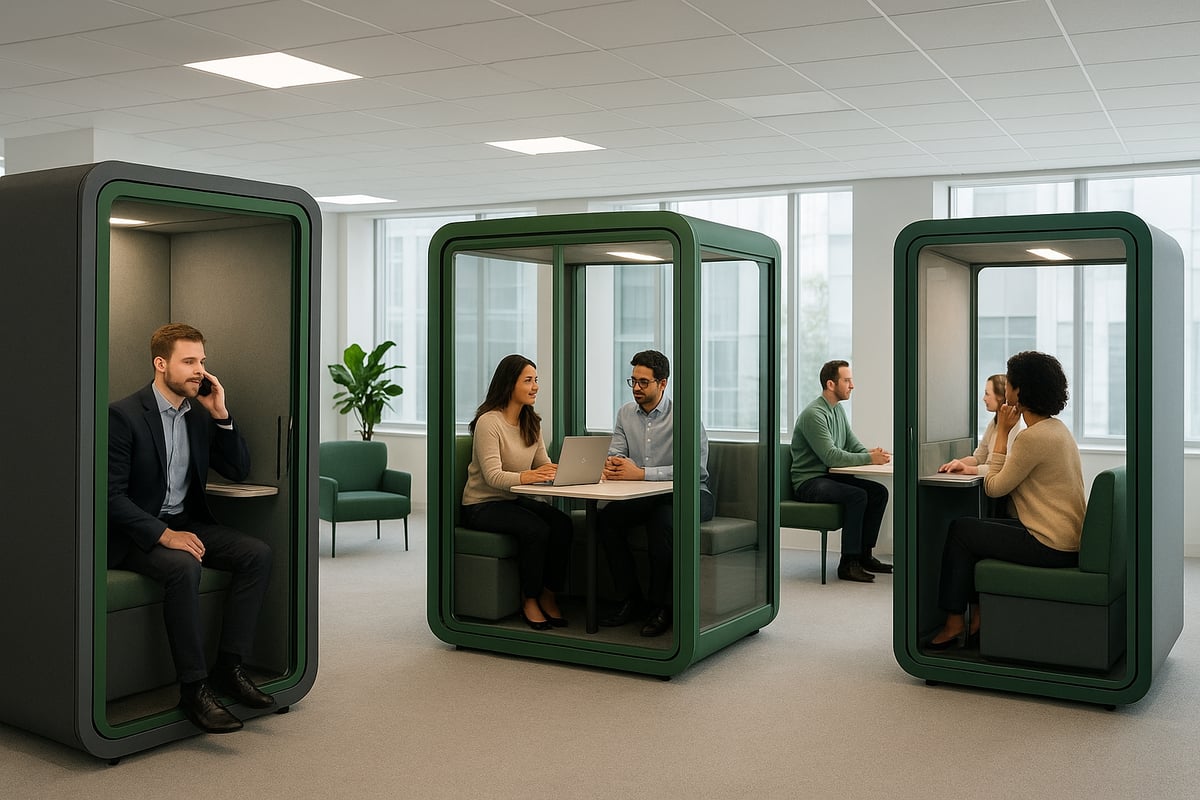
Office pods are enclosed, modular workspaces designed to deliver a quiet, distraction-free zone within open offices. They typically feature high-performance soundproofing, efficient ventilation, and integrated lighting, creating a comfortable environment for focused work or private conversations. Many office pods incorporate advanced technologies such as built-in power outlets, USB charging, and monitor mounts, ensuring seamless integration with digital workflows.
A key advantage is their modularity. Office pods can be installed without permanent construction, making them ideal for evolving workplaces. Compared to traditional cubicles or fixed meeting rooms, office pods offer a more adaptive, stylish, and efficient solution. Leading manufacturers like Juniper and Maars emphasize that these units can be relocated, reconfigured, or upgraded as business needs shift.
Typical use cases include individual focus work, confidential calls, small team meetings, and supporting hybrid work arrangements. This flexibility is central to the value proposition of office pods.
Evolution of Office Pods
The rise of open-plan offices in recent decades prioritized collaboration but often sacrificed privacy and concentration. As businesses recognized the drawbacks—noise, constant interruptions, and limited private space—demand grew for innovative solutions. Office pods emerged to address these gaps, providing enclosed areas where employees can focus or hold confidential discussions.
Hybrid and remote work trends accelerated this shift. Organizations now require adaptable spaces that accommodate both in-person and virtual collaboration. Market data from 2023 and 2024 highlights a surge in office pods adoption, with both large enterprises and smaller firms investing in these flexible solutions to future-proof their workspaces.
Manufacturers have responded with creative designs. Juniper’s FLEX Phone Booth, Meeting Pod, and Room Pod exemplify versatility for different team sizes. Maars offers the Halo, Core, and lineaCube series, each addressing specific acoustic and aesthetic needs. The evolution of office pods reflects a broader movement toward agile, employee-centric office layouts.
Types of Office Pods
There is a wide variety of office pods to suit different work styles and space requirements. Single-person phone booths are compact, ideal for private calls or deep focus. Huddle pods accommodate two to four people, making them perfect for spontaneous meetings or brainstorming sessions. Larger meeting room pods can host groups of six or more for collaborative work.
Customization is a hallmark of modern office pods. Options include different sizes, finishes, and integrated technologies, allowing organizations to match pods with their brand identity and operational needs. Many office pods are designed for mobility, with wheels or modular components that make relocation and reconfiguration straightforward as teams and floorplans evolve.
With these choices, office pods empower organizations to create flexible, productive environments that meet both current and future demands.
Key Benefits of Office Pods for Modern Workspaces
Modern organizations are rethinking how office pods can support productivity, well-being, and adaptability. Let us explore the distinct benefits that make office pods a cornerstone of innovative workspaces.
Enhanced Privacy and Focus
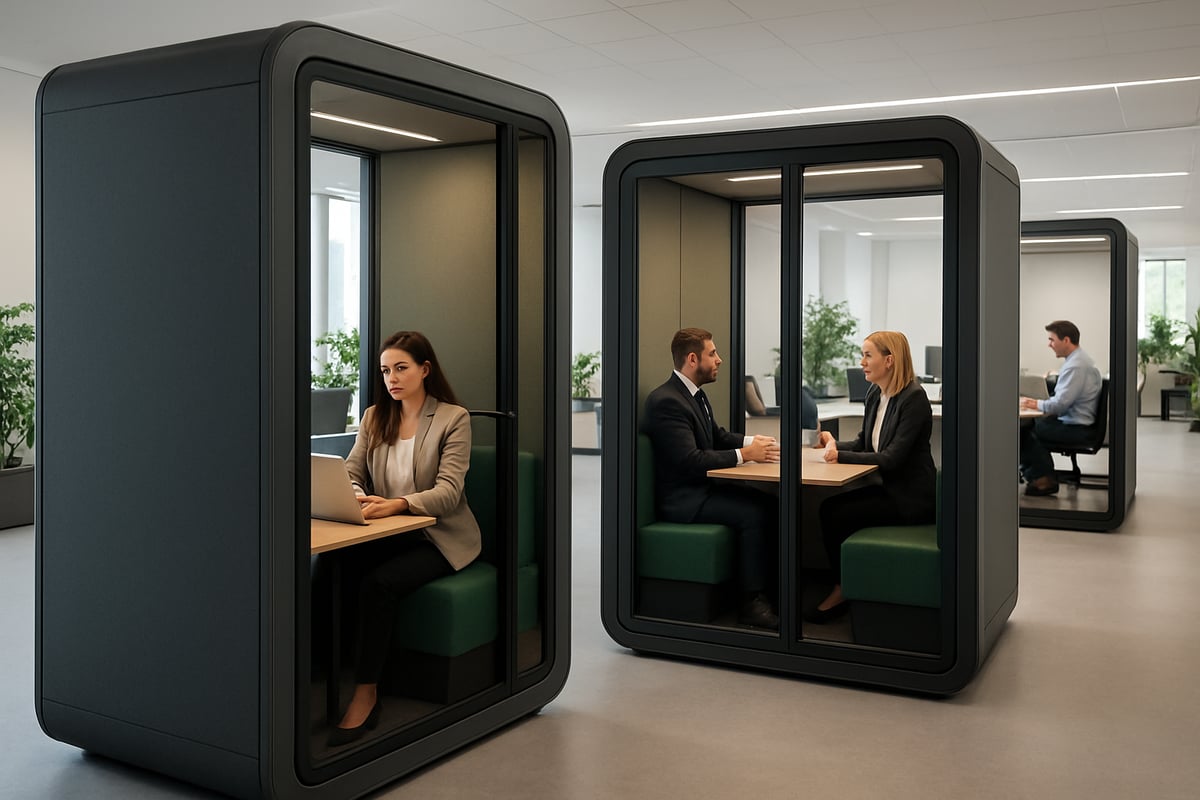
Office pods provide a private oasis in bustling office environments. Their advanced soundproofing blocks out distractions, enabling deep concentration and confidential conversations. Top models achieve up to A+ class acoustic performance and reduce noise by 44-50 dB, as measured by ISO-23351-1 standards. This level of privacy is crucial for individual focus, sensitive discussions, and supporting neurodivergent employees who benefit from sound masking.
Pods are designed with features such as acoustic panels, ventilation, and integrated lighting. Employees frequently use these spaces for private calls or tasks requiring intense concentration. To better understand the science behind these features, see the Soundproof Office Pods Guide.
By introducing office pods, organizations can dramatically improve the quality of focus and speech privacy across their teams.
Boosted Collaboration and Flexibility
Office pods transform rigid workspaces into adaptable hubs for teamwork. Their modular design means you can easily relocate or resize them as business needs evolve. Teams no longer need to reserve large meeting rooms for quick brainstorming or project updates. Instead, huddle pods support spontaneous collaboration for groups of two to four, while larger meeting pods accommodate more extensive sessions.
Pod interiors are equipped for hybrid work, with power outlets, screens, and connectivity for video calls. This flexibility allows office pods to support both in-person and virtual collaboration, streamlining communication and workflow.
Teams benefit from the ability to gather quickly, solve problems, and then return to individual tasks without disrupting others in the office.
Improved Employee Well-being and Productivity
Open-plan offices can be stressful and distracting. Office pods offer employees the choice to step into a quiet, controlled environment when they need to recharge or focus. This autonomy to select the right workspace for each task leads to reduced stress and increased job satisfaction.
Research shows that providing multiple work environments, including office pods, correlates with higher employee productivity and engagement. Employees report feeling more valued and supported when they have spaces tailored to their needs.
By integrating office pods, companies foster a culture of trust and flexibility, which drives both well-being and performance.
Space Optimization and Cost Efficiency
Installing office pods is a cost-effective way to enhance your workspace without permanent construction. Unlike traditional meeting rooms, pods can be moved, reconfigured, or even removed as organizational needs change. This adaptability allows companies to maximize existing real estate and avoid costly renovations.
Office pods also reduce the demand for large, seldom-used meeting rooms. Companies use pods to provide private zones for calls and meetings, freeing up open areas for collaborative work or amenities.
Organizations benefit from quicker installation times, minimal disruption, and long-term savings on office fit-outs.
Sustainability and Future-proofing
Sustainability is at the heart of modern office design. Office pods are built with modular, reusable parts, making them easy to upgrade or repurpose. Many leading models use eco-friendly materials and hold certifications like Cradle to Cradle Silver, ensuring minimal environmental impact.
Because office pods can be relocated or reconfigured, they support agile business planning and reduce waste from traditional construction. Some pods can be upgraded from single-person to multi-person units, extending their lifespan and value.
By choosing office pods, organizations invest in adaptable, sustainable solutions that meet the demands of today and tomorrow.
How to Choose the Right Office Pod for Your Needs
Selecting the ideal office pods for your workspace requires a thoughtful, structured approach. With so many options available, it’s essential to align your choice with your team’s unique needs, future growth, and organizational goals. Use the following framework to ensure you make an informed, future-proof decision.
Assessing Your Workspace Requirements
Start by evaluating your current office environment. Are noise levels a constant distraction? Do employees struggle to find quiet spots for focus or private conversations? Survey your team to discover their preferences and working styles.
Identify high-traffic zones, collaborative areas, and places where office pods would add the most value. Consider the workflow: Would pods near open-plan desks or collaborative zones improve focus or enhance group productivity?
By mapping these needs, you ensure that the introduction of office pods directly addresses real pain points, making your investment more impactful.
Deciding on Pod Type and Size
Choosing the right pod starts with matching the solution to your team’s activities. Office pods come in various forms, each suited for different tasks and group sizes.
Below is a quick comparison:
| Pod Type | Capacity | Best For | Example Use Case |
|---|---|---|---|
| Phone Booth | 1 person | Private calls, deep focus | Individual video calls |
| Huddle Pod | 2-4 people | Quick team meetings | Project check-ins |
| Meeting Pod | 4-6+ people | Group collaboration | Brainstorming sessions |
Factor in your available floor space and the frequency of meetings or calls. For example, the FLEX Phone Booth is ideal for solo tasks, while a Meeting Pod works well for small team collaborations. Ensure the chosen office pods fit seamlessly into your layout without crowding or disrupting movement.
Acoustic and Technological Considerations
Soundproofing is a defining feature of effective office pods. Check for ratings such as ISO-23351-1 and look for options that offer 44–50 dB noise reduction. These ensure privacy and minimize distractions, supporting both focus and confidential conversations.
Evaluate ventilation, lighting, and ergonomic comfort. Good airflow and adjustable lighting make pods more inviting for longer periods. Also, consider built-in power outlets, USB ports, and monitor mounts for hybrid and virtual meetings.
Office pods equipped with advanced technology not only boost productivity but also future-proof your workspace for evolving digital needs.
Design, Aesthetics, and Brand Alignment
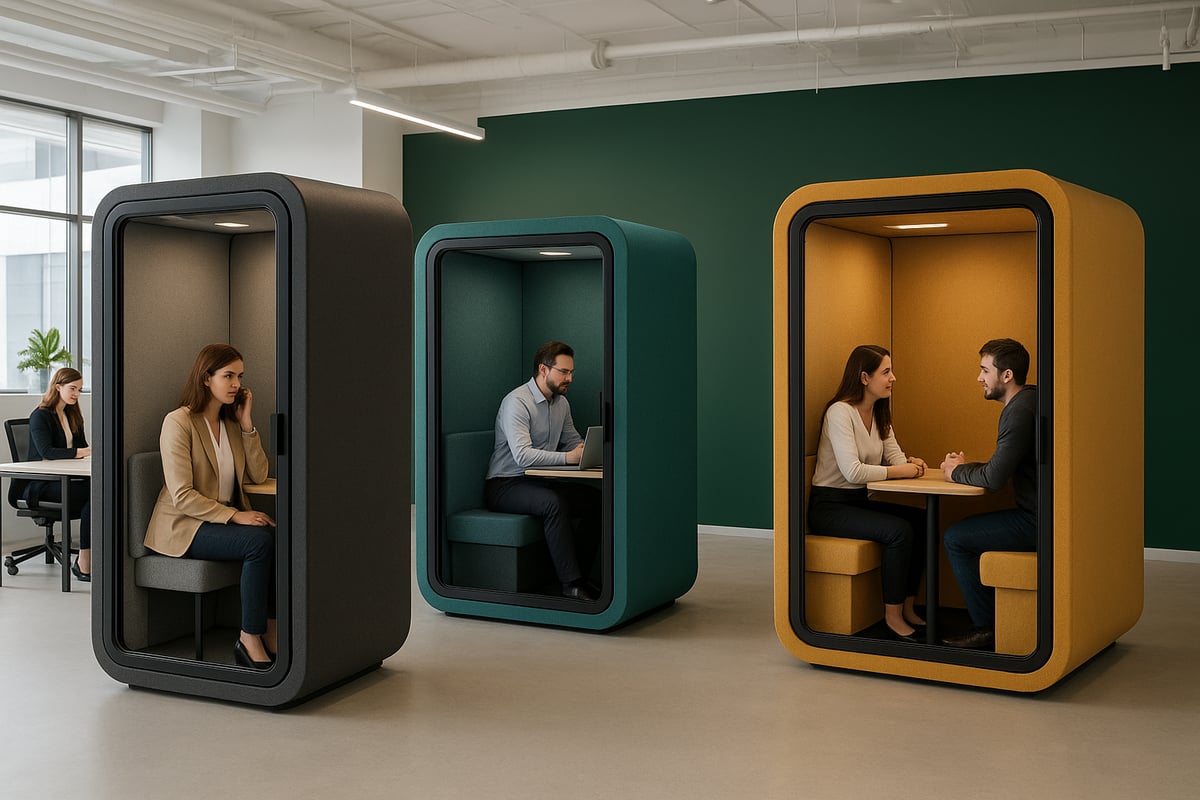
Office pods should complement your overall office design and company identity. Select finishes, colors, and materials that match your brand’s aesthetics. Many manufacturers offer customizable options such as glass panels, solid walls, and integrated furniture.
Aligning pod design with your company’s visual language reinforces your brand culture and creates a cohesive, professional environment. For example, customizing a Maars Halo pod with your corporate colors can make a powerful visual statement while maintaining functionality.
Budget, ROI, and Sustainability
Budget is a crucial factor when investing in office pods. Compare the costs of new versus pre-used options to maximize value and sustainability. Pre-owned pods can deliver significant savings and support eco-friendly initiatives. You can explore a selection of quality pre-used solutions in the Pre-Used Meeting Pods Collection.
Analyze the total cost of ownership, including installation, maintenance, and future reconfiguration. Modular designs provide long-term adaptability, reducing the need for costly renovations as your business evolves. Look for sustainability certifications and materials that align with your organization’s environmental goals.
Implementing Office Pods: Step-by-Step Integration Strategies
Integrating office pods into your workspace requires a strategic, stepwise approach to ensure a smooth transition and maximize benefits. By following a structured process, organizations can address privacy, flexibility, and productivity needs while aligning with employee expectations. Here is a comprehensive guide to implementing office pods, from initial assessment to ongoing optimization.

Step 1: Workspace Assessment and Planning
Start by conducting a thorough audit of your current office layout and workflow patterns. Engage stakeholders from HR, IT, and facilities to gather a range of insights about pain points such as noise, lack of privacy, and underutilized spaces.
Set specific goals for office pods integration. Are you aiming to boost focus, encourage collaboration, or optimize real estate? Collect employee feedback through surveys or interviews to better understand their needs and preferred work styles.
Map out high-traffic zones, open-plan areas, and locations where confidential conversations frequently occur. This ensures office pods are positioned where they will deliver the greatest value, enhancing both privacy and productivity.
Step 2: Selection and Customization
Once requirements are clear, begin shortlisting suppliers and pod models that align with your objectives. Evaluate features such as soundproofing, ventilation, lighting, and technology integration, ensuring they meet your team's expectations.
Request demos or 3D visualizations to see how different office pods will fit within your environment. Many leading brands provide design services to help you visualize finishes, furniture, and color options that complement your company’s branding.
Customize the pods to suit various use cases—from solo phone booths to collaborative meeting pods. Consider modularity and future adaptability, so your investment continues to serve as your organization evolves.
Step 3: Logistics and Installation
Careful planning of logistics and installation is essential for minimizing workplace disruption. Coordinate with suppliers to schedule delivery and assembly at convenient times, ensuring compliance with building codes and safety guidelines.
Work closely with IT to set up power, connectivity, and audiovisual equipment. Opt for suppliers that offer quick-ship or turnkey solutions for faster deployment. For a detailed overview of the process, consult Office Pod Installation Services for insights on best practices and professional support.
After installation, test all features to ensure optimal functionality. A well-executed setup lays the foundation for successful office pods integration.
Step 4: Change Management and Employee Onboarding
Effective change management is vital for encouraging adoption and maximizing return on investment. Educate staff on how to use office pods, including etiquette, booking systems, and maintenance protocols.
Communicate the benefits clearly, emphasizing how office pods support focus, collaboration, and well-being. Address questions about accessibility, scheduling, and fair use through training sessions or internal communications.
Showcase early successes and gather testimonials from employees who benefit from the new workspaces. This helps build momentum and fosters a culture of innovation.
Step 5: Monitoring, Feedback, and Optimization
After implementation, regularly monitor office pods usage and gather feedback from users. Analyze patterns to determine if pods are being utilized as intended or if adjustments are needed.
Solicit input through surveys or suggestion boxes, and be prepared to reconfigure layouts as teams grow or priorities shift. Organizations that remain agile and responsive to feedback can scale office pods effectively, ensuring ongoing alignment with business goals.
Continuous improvement helps maintain a dynamic, productive workspace that adapts to changing needs.
Office Pods Trends and Innovations for 2025
The landscape of office pods is evolving rapidly, reflecting a shift toward more agile, tech-driven, and employee-centered workspaces. In 2025, organizations are prioritizing solutions that balance flexibility, sustainability, and user experience. Office pods are at the forefront of this movement, offering a blend of advanced features and adaptable design. Let us explore the trends and innovations shaping the future of office pods, from smart technology to sustainable materials, and see how they can transform your workspace.
Smart Technology Integration
Smart technology is redefining how office pods function and interact with their users. In 2025, expect to see pods equipped with touchless entry systems, occupancy sensors, and integrated smart booking platforms. Features like adaptive lighting, climate control, and seamless AV setups are becoming standard, providing a frictionless experience for employees. These innovations not only enhance comfort but also improve space utilization and energy efficiency. According to Smart Technology Integration in Office Pods, IoT-enabled pods are driving new levels of productivity and connectivity in modern offices.
Advanced Acoustic and Environmental Controls
Acoustic performance remains a top priority as open offices persist. The latest office pods are designed to achieve up to 50 dB sound reduction, meeting or exceeding ISO-23351-1 A+ class standards. Enhanced soundproofing ensures that confidential conversations and focused work stay undisturbed by ambient noise. Environmental controls are also advancing, with features such as HEPA filtration, active ventilation, and automated climate management. For a deeper understanding, see Acoustic Performance Standards for Office Pods, which highlights how these standards help maintain speech privacy and overall well-being.
Modular and Sustainable Design
Sustainability is now a central consideration in office pods design. Manufacturers are focusing on modular systems that can be reconfigured, relocated, or upgraded as business needs change. Pods made from recycled materials and certified under eco-friendly standards, such as Cradle to Cradle, are gaining popularity. This approach not only minimizes waste but also future-proofs investments. Companies can adapt their workspace without major renovations, reducing both costs and environmental impact. The modular nature of these pods supports agile growth and responsible office planning.
Customization and Personalization
Personalization is key to creating a workspace that reflects company culture and meets diverse employee needs. In 2025, office pods offer a wide range of customization options, from finishes and colors to integrated furniture and branding elements. Organizations can design pods tailored to specific departments, work styles, or functional requirements. Flexible layouts accommodate different tasks, whether it is focused work, collaborative sessions, or video conferencing. This level of customization ensures that the workspace supports productivity while reinforcing brand identity.
Supporting Hybrid and Activity-Based Work
Office pods are crucial in supporting hybrid and activity-based work models. With the rise of remote and flexible schedules, pods provide dedicated spaces for video calls, team huddles, or deep concentration. Integration with office management platforms enables seamless scheduling and usage tracking. Real-world applications show organizations using pods to adapt quickly to changing work patterns, ensuring that employees have the right environment for any task. As hybrid work becomes the norm, office pods continue to bridge the gap between in-person and virtual collaboration.
Case Studies and Real-World Applications
Enterprises across industries are leveraging office pods to boost privacy, productivity, and employee satisfaction. Projects like Deloitte, Rabobank, and the Matrix Innovation Center have reported measurable improvements in workspace efficiency and well-being. Adoption rates are climbing among both global corporations and SMEs, driven by the need for flexible, future-ready environments. The data is clear: office pods are not just a trend, but a proven solution for the evolving demands of the modern workplace.
Frequently Asked Questions About Office Pods
Office pods are becoming a staple in modern offices, and many organizations have questions about their features, benefits, and usage. Below you will find answers to the most common questions to help you better understand office pods and how they can fit into your workspace.
What are office pods and how do they work?
Office pods are enclosed, modular workspaces designed to provide privacy and focus in busy office environments. Unlike traditional cubicles, office pods offer enhanced soundproofing, integrated lighting, and ventilation. Most office pods can be placed anywhere in the office without major construction, making them a flexible solution for individual tasks, confidential calls, or small group meetings. For example, Juniper’s pods are described as “enclosed workspaces with space for a desk and a chair,” making them ideal for focused work or private conversations. Office pods are designed to adapt to evolving office needs.
Are all office pods soundproof?
Not all office pods have the same level of soundproofing. High-quality office pods use acoustic panels and insulation to reduce noise, with some achieving up to 44–50 dB sound reduction (according to Maars). The best office pods comply with ISO-23351-1 A+ class standards, which ensure effective noise isolation for private work and sensitive discussions. Always check the acoustic rating before selecting a pod to ensure it meets your privacy requirements. Office pods with higher soundproofing are especially valuable for confidential conversations.
How do I choose the right office pod for my team?
Selecting the right office pods involves assessing your team’s needs, work styles, and available space. Consider the number of users, privacy requirements, and whether you need single-person or multi-person pods. Review features like ventilation, power outlets, and technology integration. Survey employees to understand their preferences and identify where office pods will have the most impact. Matching the pod’s design and finishes to your company’s branding can also enhance the workspace. Evaluate the total cost of ownership and flexibility for future changes.
Can office pods be moved or reconfigured?
Most office pods are modular, which means they can be easily relocated or reconfigured as your organization evolves. This flexibility is a key advantage over permanent meeting rooms. Office pods can be moved within the office or even to a new location with minimal disruption. For growing teams or changing layouts, modular office pods allow for quick adjustments without costly renovations. Brands like Maars and Juniper offer systems that are designed for easy assembly and reconfiguration.
What is the typical cost of an office pod?
The cost of office pods varies depending on size, features, and brand. A single-person phone booth can start around $6,993, while larger meeting pods for four or more people may cost $13,309 or more. These prices often compare favorably to traditional construction, especially when factoring in installation speed and flexibility. Pre-used options are available for budget-conscious buyers. For more insights into the office pods market size and growth forecast, explore industry reports to understand pricing trends and demand drivers.
Do office pods require building permits or special installation?
Most office pods do not require major construction or building permits. They are designed for quick installation, often in just a few hours. It is important to ensure compliance with local safety regulations and coordinate with building management. Installation includes connecting power and, if needed, integrating AV equipment. Because office pods are considered furniture rather than fixed structures, they offer a streamlined setup process for busy offices.
How do office pods support sustainability?
Office pods support sustainability through modular design, reusable materials, and eco-friendly certifications. Many leading brands use recycled materials and energy-efficient systems in their pods. For instance, Maars’ lineaCube has achieved Cradle to Cradle Silver certification, reflecting its commitment to environmental standards. Pods can be upgraded or reconfigured instead of replaced, reducing waste. To learn more about these trends, visit Sustainability and Eco-Friendly Design in Office Pods for information on sustainable materials and green practices in the industry.
As you’ve seen throughout this guide, office pods are reshaping how we work—offering privacy, flexibility, and a smarter use of space for individuals and teams alike. If you’re considering how to bring these benefits to your own workplace, exploring the latest designs can be a great next step. You can find options that fit your team’s needs, whether you’re looking for sleek single-person booths or larger meeting pods for group collaboration. Why not take a look at the possibilities for yourself?
Browse our selection of new pods
and discover how easy it is to create a workspace that truly supports focus, productivity, and well-being.