

Guide to Office Meeting Pods: Modern Solutions for 2026
The modern UK office is changing fast. Agile workstyles and open-plan layouts are everywhere, but distractions and privacy challenges remain. Enter office meeting pods, transforming how teams collaborate and focus in 2026.
This comprehensive guide explains what office meeting pods are, why they matter for UK businesses today, and how they deliver flexible, private spaces that boost productivity. You will learn how these pods meet the evolving needs of hybrid and in-person work.
We will explore their evolution, benefits, features, and the steps to choose and implement the right pods for your workspace. Discover how to create a more effective, future-ready office environment.
The Evolution of Office Meeting Pods in the UK
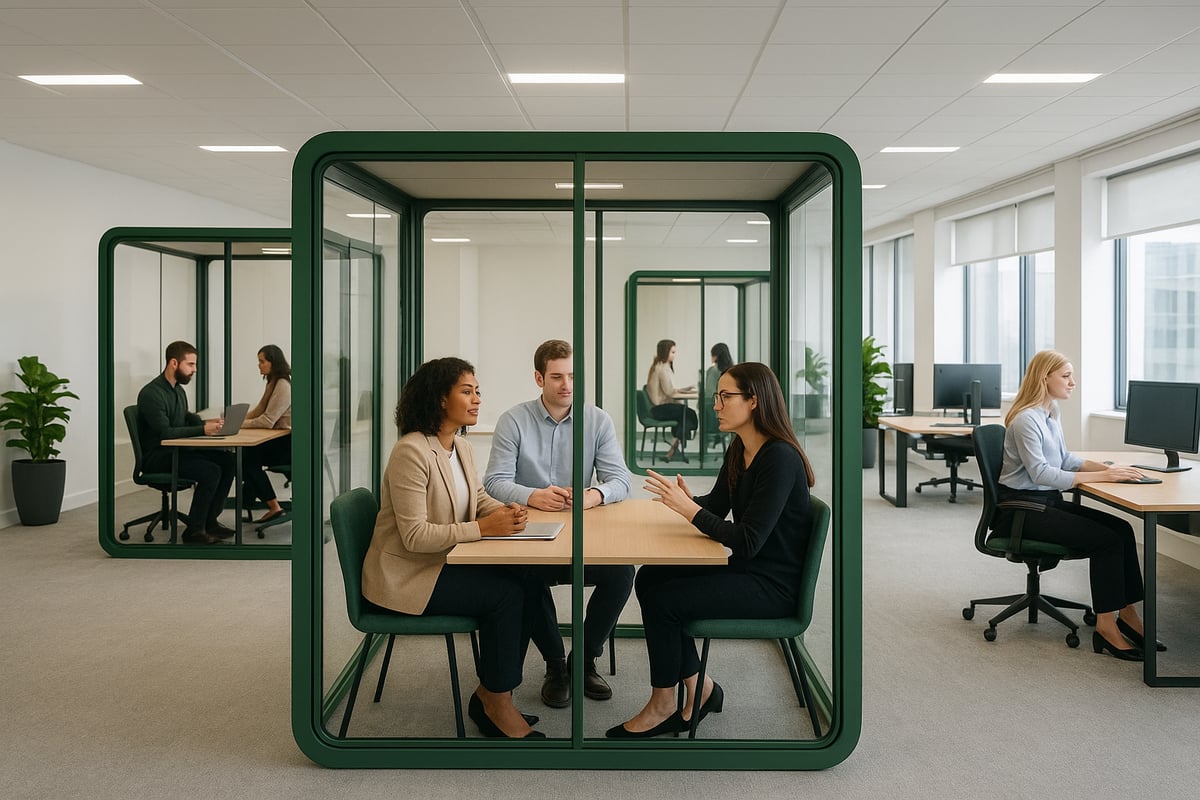
The landscape of UK workspaces has transformed rapidly since 2020, with office meeting pods becoming a crucial component in modern workplace design. As open-plan offices became widespread, the demand for agile, private, and multi-functional spaces soared. Today, office meeting pods provide a flexible answer to evolving business needs, offering privacy and productivity for teams in every sector.
The Shift from Traditional Meeting Rooms
Open-plan offices, now the norm in UK organisations, created a pressing need for acoustic privacy. Traditional meeting rooms often failed to keep pace with these requirements. They typically required significant investment, permanent construction, and occupied valuable floor space regardless of actual usage. This led to inefficiencies and underutilisation.
With the rise of hybrid and remote work, employees needed on-demand spaces for confidential calls and focused discussions. Office meeting pods emerged as a more flexible, cost-effective alternative, addressing pain points like lack of privacy and rigid layouts.
Key downsides of conventional meeting rooms:
- High build and maintenance costs
- Inflexibility to adapt as teams grow or shrink
- Inefficient use of office space
The push towards hybrid work accelerated the shift, making office meeting pods a practical choice for dynamic workplaces.
Emergence and Growth of Meeting Pods
The introduction of office meeting pods in UK offices began around 2020, initially as a niche solution. By 2023, adoption surged, driven by the need for employee wellness, improved collaboration, and increased productivity. Companies recognised that pods offered quiet zones for focused work and spontaneous meetings, directly supporting team performance.
Key drivers behind the rise of office meeting pods include:
- Employee demand for privacy and reduced distractions
- Support for hybrid and flexible work models
- Enhanced collaboration through dedicated, tech-enabled spaces
Market data highlights this growth. According to industry reports, the UK market for office meeting pods expanded by over 30% between 2020 and 2025, with installations in both corporate headquarters and coworking spaces. The versatility of pods, available in multiple sizes and configurations, has made them a staple in the modern UK office.
Regulatory and Sustainability Considerations
As office meeting pods became mainstream, compliance with UK building regulations became essential. Modular pods must meet fire safety, ventilation, and accessibility standards, ensuring safety and comfort for all users. Sustainability has also taken centre stage, with businesses seeking reusable and eco-friendly solutions to reduce their environmental impact.
A key certification for pod acoustic performance is ISO 23351-1:2020. This standard, widely recognised in the UK, verifies that pods provide effective sound reduction suitable for confidential work. For further details on how pods are tested and certified, see the ISO 23351-1:2020 acoustic performance certification.
Sustainable practices now include:
- Use of recycled materials in pod construction
- Offering pre-used and refurbished pod options
- Designing pods for disassembly and reuse
These considerations ensure that office meeting pods deliver both regulatory compliance and long-term value.
Case Studies
UK businesses across sectors have adopted office meeting pods to solve real workplace challenges. For example, a leading tech firm in Manchester implemented pods to address meeting room bottlenecks. The result was a 40% reduction in scheduling conflicts and more productive team sessions.
In Central London, a coworking provider installed a range of pods to attract new tenants. Flexible pod options enabled the space to cater to diverse client needs, from solo entrepreneurs to growing startups. Both examples demonstrate how office meeting pods drive efficiency and boost satisfaction in the UK workplace.
Office meeting pods have clearly evolved from a novel concept to an essential part of the British office, supporting privacy, flexibility, and sustainability.
Key Benefits of Office Meeting Pods for Modern Workspaces
Office meeting pods have become a cornerstone of the modern UK workplace, supporting agile teams in open-plan environments. These innovative solutions deliver privacy, flexibility, and cost efficiency, making them indispensable for organisations adapting to hybrid and collaborative work models.
Enhanced Privacy and Acoustic Performance
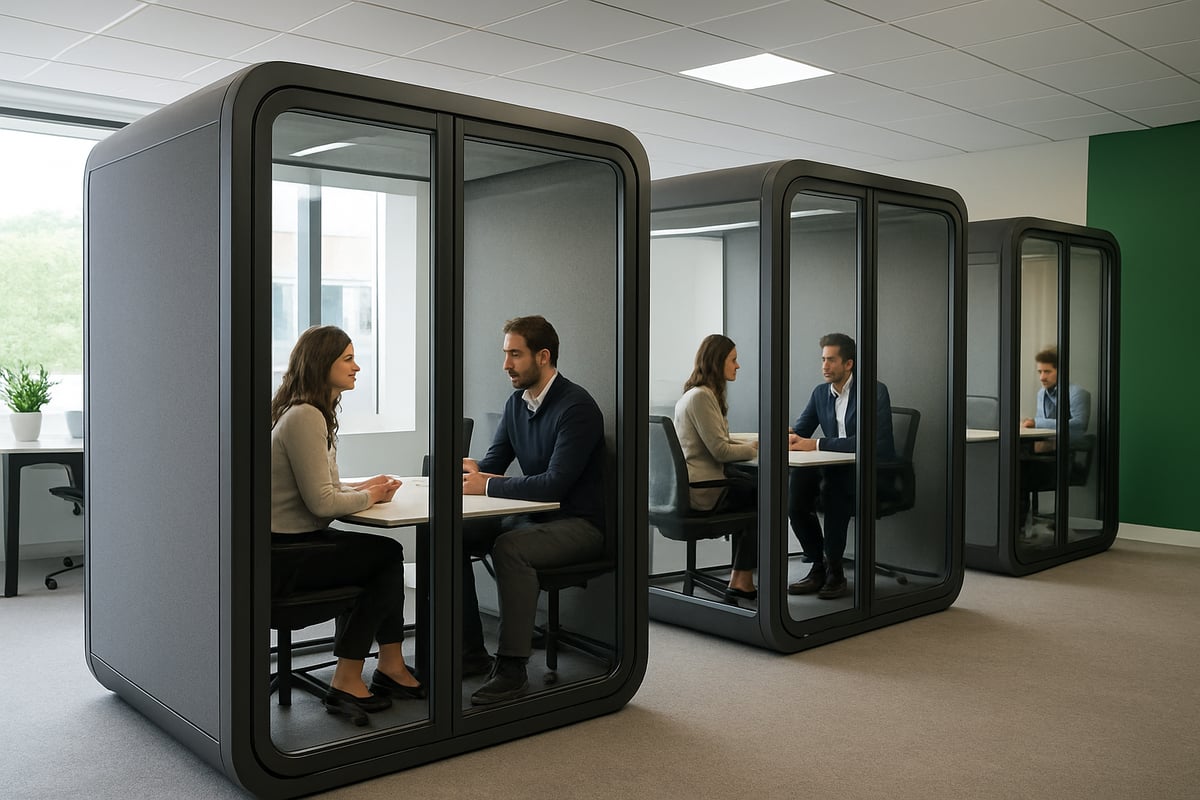
One of the standout benefits of office meeting pods is their superior soundproofing. Leading UK models achieve acoustic ratings of 30 to 35 dB, supporting confidential conversations and focused work. This level of acoustic performance helps reduce distractions and ensures sensitive information stays private.
Many businesses prioritise these features, as 70% of UK employees report fewer interruptions in offices equipped with pods. For a deeper dive into how these solutions deliver privacy, visit office pods and privacy solutions.
Pods are also tested against ISO 23351-1:2020, offering verified acoustic quality for peace of mind.
Flexibility and Modularity
Office meeting pods are designed for adaptability. Unlike traditional meeting rooms, they can be relocated or reconfigured with minimal disruption. This flexibility is ideal for businesses experiencing growth or evolving workspace needs.
Pods can be used for temporary project teams or hot-desking, offering a dynamic response to changing demands. No major construction or planning permission is required, making installation quick and straightforward.
With modular options, companies can scale up or down as needed, ensuring their investment in office meeting pods remains future-proof and cost-effective.
Improved Collaboration and Well-being
Collaboration thrives in environments where employees feel comfortable and focused. Office meeting pods create dedicated spaces for brainstorming, hybrid calls, and spontaneous meetings, supporting both teamwork and individual focus.
These pods also contribute to employee well-being by providing quiet zones within busy offices. Staff enjoy reduced stress and improved morale, as they have access to spaces designed for comfort and concentration.
Pods cater to a range of activities, from private calls to creative sprints, making office meeting pods an essential tool for fostering a positive and productive workplace culture.
Space and Cost Efficiency
Maximising workspace is crucial in high-rent UK cities. Office meeting pods allow businesses to optimise their office footprint without the expense or permanence of traditional meeting rooms.
Upfront costs are lower, and ongoing expenses—such as utilities and maintenance—are reduced. According to a UK office furniture survey, pods can decrease meeting room congestion by up to 40 percent, freeing up valuable space for other uses.
By investing in office meeting pods, organisations gain a scalable solution that delivers significant value while keeping operational costs in check.
Sustainability and Environmental Impact
Sustainability is increasingly important for UK businesses. Office meeting pods are often built with recycled materials and low-VOC finishes, supporting eco-friendly office design.
Pods are reusable assets, helping to reduce fit-out waste. Many suppliers now offer pre-used or refurbished options, allowing companies to lower their carbon footprint and save money.
Choosing office meeting pods demonstrates a commitment to both environmental responsibility and long-term business sustainability, aligning with modern corporate values and industry standards.
Types of Office Meeting Pods Available in the UK
Choosing the right office meeting pods is crucial for modern UK workspaces aiming for privacy, flexibility, and efficiency. With several types available, organisations can tailor solutions to their unique needs. This section explores the main varieties, their typical features, and popular use cases for 2026. For a deeper dive into the range of options, see this guide on meeting pods for offices.
Single-Person Pods and Phone Booths
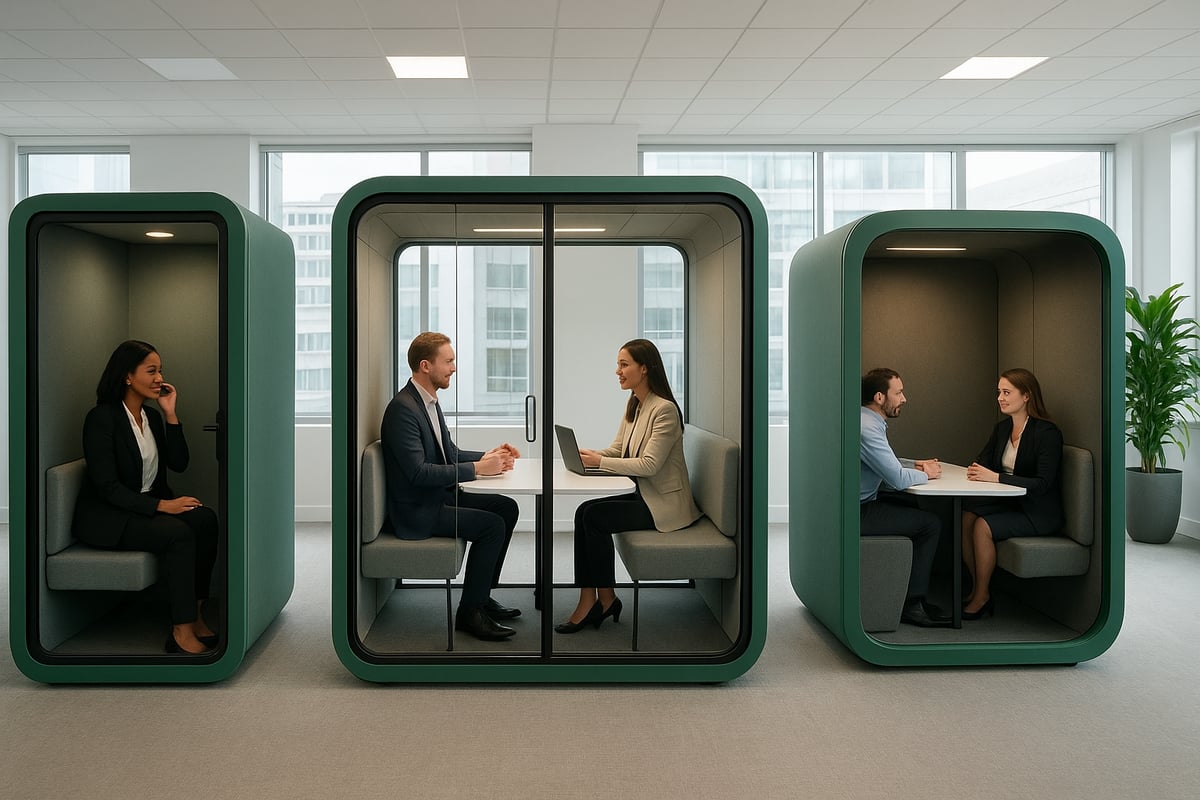
Single-person office meeting pods are designed for private calls, focused work, or neurodiversity support. These compact solutions feature acoustic panels, effective ventilation, and adjustable lighting. Their small footprint fits seamlessly into most UK offices.
- Ideal for confidential calls or video meetings
- Enhanced soundproofing (up to 35 dB)
- Integrated power and USB charging
Popular UK models include offerings from Spacestor and Orangebox. With rising hybrid work, these pods help reduce distractions and support employee well-being.
Small Group and Huddle Pods (2–4 People)
Small group office meeting pods accommodate two to four people, perfect for team collaboration, interviews, or one-on-one discussions. These pods often include built-in seating, power sockets, and AV compatibility for hybrid meetings.
- Flexible layouts for brainstorming or project sprints
- Good ventilation and ergonomic design
- Quick installation without major disruption
A marketing agency might use huddle pods to facilitate creative sessions, while coworking spaces benefit from modularity and easy reconfiguration.
Large Meeting Pods (4–8+ People)
Large office meeting pods suit board meetings, workshops, or hybrid conferencing, typically hosting four to eight or more participants. They offer enhanced ventilation, dimmable lighting, and integrated AV screens for seamless communication.
- Spacious interiors for group dynamics
- Acoustic performance for privacy
- Options for custom branding and finishes
Legal firms and consultancies in the UK are increasingly deploying these pods for confidential client meetings, ensuring discretion and comfort.
Specialist Pods (Wellness, Nap, and Accessibility)
Specialist office meeting pods address unique workplace needs, from wellness and relaxation to inclusivity. Wellness pods provide a space for mental health breaks, while nap pods support employee rest and recovery.
- Step-free access and wide doors for accessibility
- Adjustable lighting for relaxation or focus
- Compliance with Equality Act and UK accessibility standards
Coworking spaces in London have introduced lactation and prayer pods, supporting diverse user requirements and enhancing workplace culture.
Outdoor and Hybrid Pods
Outdoor and hybrid office meeting pods are weatherproof, enabling use on terraces or external office spaces. These solutions are perfect for hybrid events or pop-up meetings, expanding usable workspace beyond traditional walls.
- Durable construction for UK climate
- Integrated power and connectivity
- Flexible placement for changing layouts
Outdoor pods boost creativity and collaboration, offering a fresh environment for meetings or focused work.
Essential Features and Innovations in 2026 Meeting Pods
Office meeting pods have become central to the modern UK workspace, thanks to a wave of innovative features in 2026. Businesses now expect more than just a quiet corner—they demand smart, sustainable, and flexible solutions that elevate productivity and employee well-being.
Acoustic Engineering and Soundproofing
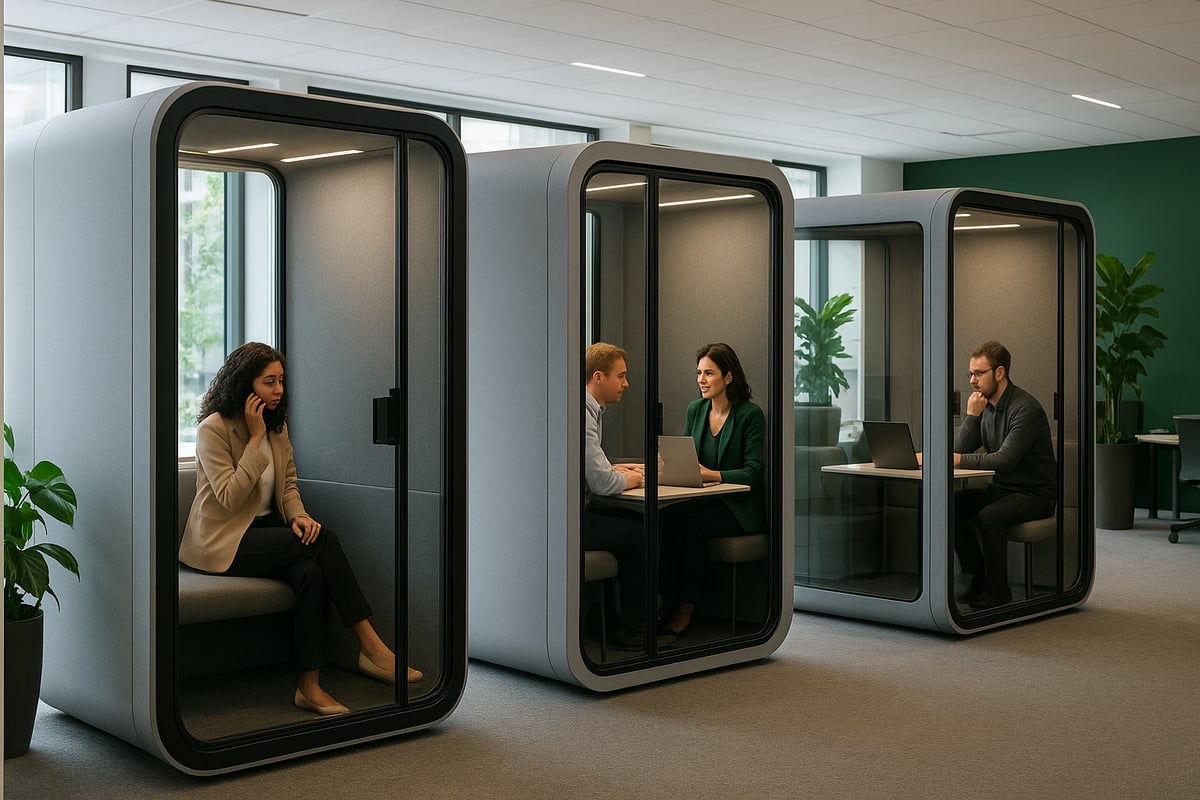
Sound isolation is at the heart of office meeting pods. Advanced wall construction, multi-layered panels, and acoustic seals ensure that conversations remain confidential and distractions are minimised. Leading UK models now achieve up to 35 dB sound reduction, certified under ISO 23351-1:2020.
For companies seeking the best in acoustic performance, understanding the basics is key. The Soundproof office pod guide explains how certified pods block out ambient noise, making them ideal for sensitive discussions and focused work.
Acoustic performance is not just about silence. It is about creating an environment where teams can collaborate without interruptions. As a result, office meeting pods with high soundproofing ratings have become a standard request in UK offices.
Integrated Technology and Connectivity
Modern office meeting pods are equipped with the latest technology to meet the needs of hybrid teams. Built-in power outlets, USB-C charging, and wireless charging pads are now standard features.
Smart controls are also making a difference. Many pods offer app-based booking, occupancy sensors, and integrated climate control. These innovations help businesses manage pod usage efficiently and ensure a comfortable environment for every user.
Video conferencing compatibility is a must. Pods come pre-wired for AV equipment, supporting seamless virtual meetings and presentations.
Ergonomics and Comfort
Comfort is a top priority in the design of office meeting pods. Adjustable lighting, efficient ventilation, and temperature controls allow employees to personalise their workspace.
Seating options have evolved, with ergonomic chairs and sit-stand desks now available. These features promote healthy posture and reduce fatigue during long meetings.
Pods are also designed to be accessible and welcoming, with calming interior finishes and biophilic design elements that bring a touch of nature indoors.
Sustainability and Material Choices
Sustainability is driving innovation in office meeting pods across the UK. Manufacturers are prioritising recycled materials, low-VOC finishes, and modular construction to reduce environmental impact.
Pre-used and refurbished pods are gaining popularity, offering a cost-effective and eco-friendly alternative to new models. Circular economy principles ensure that pods can be disassembled, relocated, or upgraded with minimal waste.
Businesses are increasingly selecting pods that contribute to their sustainability goals, making green credentials a core selection criterion.
Accessibility and Inclusivity
Accessibility is non-negotiable in 2026. Office meeting pods are designed with step-free entry, wide doors, and height-adjustable furniture to accommodate all users.
Compliance with UK accessibility standards is now expected. Features such as visual alarms, tactile signage, and easy-to-use controls ensure inclusivity for people with disabilities.
Pods can be customised to meet specific needs, supporting neurodiversity and promoting a truly inclusive workplace environment.
Aesthetic and Customisation Options
Aesthetics play a crucial role in the appeal of office meeting pods. Businesses can choose from a wide range of finishes, including wood veneers, glass panels, and branded graphics.
Customisation extends to layout and size, with modular configurations allowing pods to fit any office footprint. Some UK companies opt for custom-branded pods to reinforce their corporate identity.
The visual flexibility of pods means they complement both traditional and contemporary office designs, making them a versatile choice for any workspace.
Safety, Compliance, and Wellness
Safety and wellness are central to the latest office meeting pods. Fire safety certifications, air quality monitoring, and anti-microbial surfaces are standard in new models.
Pods support workplace wellness programs by offering quiet zones for relaxation, meditation, or focused work. Features like circadian lighting and air purification further enhance employee well-being.
Compliance with UK regulations is closely monitored, ensuring that pods are not only safe but also support the health and productivity of everyone in the office.
Step-by-Step Guide to Selecting and Implementing Office Meeting Pods
Selecting and implementing office meeting pods in the UK requires a strategic approach. By following a clear process, businesses can maximise privacy, collaboration, and value, ensuring pods meet the specific needs of modern workplaces.
Step 1: Assess Your Workspace Needs
Begin by analysing how existing meeting rooms are used. Are there frequent bottlenecks or privacy concerns? Gather input from staff across departments to identify pain points and specific requirements for office meeting pods.
Consider conducting a workplace survey to measure demand for quiet zones and confidential meeting areas. According to office pods market growth statistics, UK businesses have seen a significant rise in demand for flexible and private workspace solutions. This step ensures your investment aligns with the real needs of your teams.
Step 2: Define Pod Specifications and Budget
Next, outline the ideal specifications for your office meeting pods. Determine the number of occupants, acoustic performance, integrated technology, and accessibility requirements. Decide if your office needs single-person booths, huddle pods, or larger meeting solutions.
Set a realistic budget, factoring in both new and pre-used meeting pods collection as sustainable, cost-effective options. In the UK, prices typically range from £7,000 to £30,000+ per pod, depending on size and features. Consider leasing for greater flexibility or purchasing for long-term value.
| Option | Cost Range | Benefits |
|---|---|---|
| New Pods | £12,000+ | Latest features, custom finish |
| Pre-used Pods | £7,000–£15,000 | Eco-friendly, budget-friendly |
Step 3: Evaluate UK Suppliers and Product Options
Research reputable UK-based suppliers of office meeting pods. Compare manufacturers and specialist resellers, checking for robust warranties, aftercare services, and clear lead times (usually 4–10 weeks).
Request product demos and assess the range of available models. Direct manufacturers may offer customisation, while resellers may provide a broader selection. Ensure all products comply with UK safety and acoustic standards. Prioritise suppliers with strong client testimonials and responsive support.
Step 4: Plan Layout and Integration
Work with your supplier or a workspace consultant to plan the placement of office meeting pods. Use 3D design tools to visualise pod locations and optimise flow without disrupting daily operations.
Ensure layouts comply with fire safety, accessibility, and ventilation requirements. For example, a London office successfully integrated pods by spacing them along collaborative zones, maintaining clear access routes. Proper planning helps pods blend seamlessly into your workspace, boosting efficiency.
Step 5: Installation and Staff Onboarding
Coordinate pod delivery and arrange for professional installation, which is often completed within a few hours. Prepare staff by sharing pod usage guidelines and integrating booking systems for easy scheduling.
Offer a brief onboarding session to introduce the features of your new office meeting pods, such as soundproofing and connectivity. Hybrid offices can benefit by using pods for both in-person and virtual meetings, enhancing flexibility and productivity from day one.
Step 6: Monitor, Maintain, and Optimise
After installation, implement a regular maintenance and cleaning schedule to keep your office meeting pods in optimal condition. Gather staff feedback on pod usage, comfort, and any evolving needs.
Use this feedback to adjust pod placements or invest in additional units as your business grows. Office meeting pods are scalable assets that support dynamic workplace requirements, ensuring ongoing value and satisfaction for your teams.
Future Trends: The Next Generation of Office Meeting Pods (2026 and Beyond)
As the workplace continues to evolve, the future of office meeting pods in the UK promises a blend of advanced technology, wellness-centric design, and sustainability. Companies are reimagining how these adaptable spaces can meet shifting business needs, regulatory standards, and employee expectations.
AI and Smart Pod Integration
AI technology is rapidly transforming office meeting pods, making them more intuitive and efficient for UK businesses. Smart pods are now equipped with occupancy sensors that automatically manage lighting, ventilation, and temperature based on real-time usage. Integrated AI systems can analyze usage patterns, predict maintenance needs, and even personalize settings for frequent users. This level of automation ensures that office meeting pods not only support productivity but also reduce energy consumption and operational costs. With AI, pods are truly becoming intelligent spaces that adapt seamlessly to the dynamic flow of hybrid work.
Hyper-Modularity and Mobility
Flexibility is at the forefront of office meeting pods’ evolution. Hyper-modular designs allow pods to be easily reconfigured or relocated as office layouts change. UK companies are increasingly choosing pods with plug-and-play capabilities, enabling rapid setup without major downtime. This mobility supports agile teams, pop-up collaborations, and even temporary project spaces. Pods designed for effortless movement and reassembly help future-proof workplaces, ensuring that office meeting pods remain valuable assets as business needs shift. The ability to adapt quickly is now a defining feature for modern UK offices.
Wellness-Driven Design
Employee well-being is a central theme shaping the future of office meeting pods. New designs incorporate circadian lighting, air purification systems, and biophilic elements such as natural materials and plant integration. Pods are being tailored as holistic wellness spaces, offering areas for meditation, naps, or focused work away from distractions. UK employers recognize that supporting mental health and stress reduction drives productivity and satisfaction. By prioritizing wellness, office meeting pods help foster a healthier, more resilient workforce ready to meet the demands of a modern workspace.
Circular Economy and Sustainability Leadership
Sustainability is no longer optional for UK businesses investing in office meeting pods. The trend toward circular economy principles means more pods are designed for easy disassembly, refurbishment, and recycling. Refurbished and pre-used pods are in high demand, offering cost-effective and eco-friendly alternatives to new builds. Manufacturers are using recycled materials, low-VOC finishes, and modular components that extend the product lifecycle. This approach not only reduces environmental impact but also aligns with corporate social responsibility goals, making office meeting pods a cornerstone of green office strategies.
Enhanced Hybrid Collaboration Tools
Hybrid work models require office meeting pods to excel at virtual collaboration. Next-generation pods now feature built-in 4K video conferencing equipment, advanced acoustic panels, and seamless integration with office management apps. Superior soundproofing remains critical, with leading UK pods meeting ISO 23351-1:2020 standards for acoustic performance. For more information on these standards and their impact, see the Acoustic performance of office pods. Enhanced connectivity and AV tools ensure that both in-person and remote participants can engage effectively, making pods essential for hybrid teams.
Regulatory and Compliance Evolution
Regulations around office meeting pods are expected to evolve in the UK, especially regarding accessibility, fire safety, and acoustic standards. Anticipated updates to building codes will require pods to support diversity, equity, and inclusion, with features like step-free access and adjustable furniture. Ongoing research, such as the Accuracy experiment of ISO 23351-1, highlights the importance of reliable acoustic measurement in compliance efforts. Staying ahead of regulatory changes ensures that office meeting pods remain compliant and inclusive for all users.
Real-World Examples and Case Studies
Several UK companies are already pioneering the next generation of office meeting pods. A London fintech firm recently reported increased productivity and satisfaction after deploying AI-powered pods with wellness features. Another tech company adopted hyper-mobile pods, allowing rapid reconfiguration for project-based work. Data from these early adopters reveal a notable reduction in meeting room congestion and improved employee engagement. These real-world successes demonstrate how future-ready office meeting pods are reshaping the workplace landscape across the United Kingdom.
As you’ve seen, meeting pods are reshaping the way we work by offering focused, confidential spaces that adapt to your business’s evolving needs. If you’re considering upgrading your office for 2026, exploring new meeting pods can help you create a more productive and flexible environment for your team. With Breeze’s wide range of modular, soundproof options, you can find the perfect fit—whether you’re aiming for individual focus or collaborative innovation. Ready to take the next step toward a smarter workspace?
Browse our selection of new pods
and discover how your office can benefit from the latest in meeting pod solutions.